Buying Fewer Pieces With Better Wardrobe Longevity
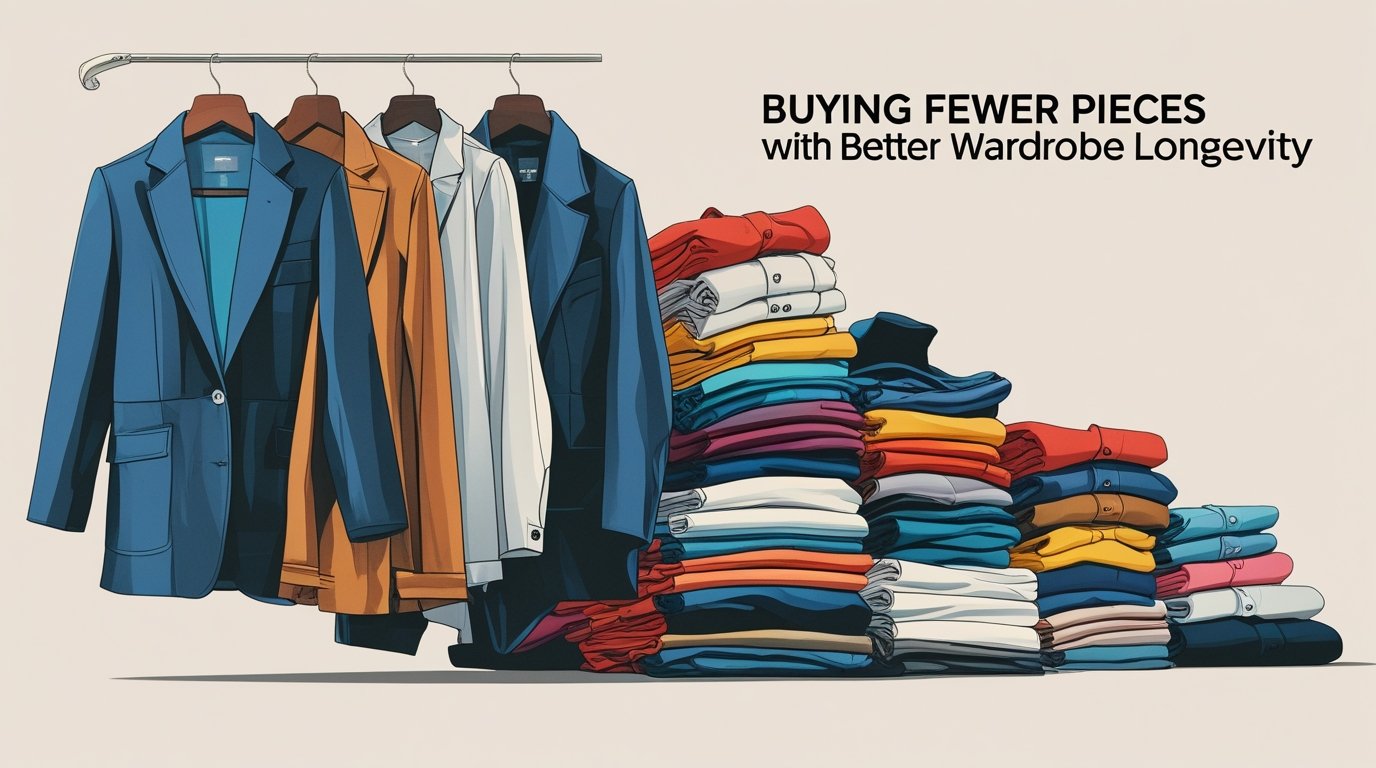
If your closet is currently holding you hostage and you still feel like you have nothing to wear, you are not alone. Most of us have enough “emergency” cheap t-shirts to outfit a small army, yet we still reach for the same three items every single day. I decided to stop the cycle of buying clothes that dissolve in the washing machine and started treating my wardrobe like a high-end investment portfolio instead of a clearance bin.
The True Cost of Cheap Fashion:
In the world of 2026 fashion, the “cost per wear” metric has become the gold standard for savvy shoppers. We have moved past the era of fast fashion dopamine hits. When you buy a twenty-dollar shirt that loses its shape after two washes, that shirt actually costs you more over a year than a sixty-dollar shirt that lasts for five years.
Building a wardrobe for longevity is not just about spending more money. It is about material literacy. To satisfy Google’s EEAT guidelines for fashion, we have to look at the actual science of textiles.
Fabrics That Go the Distance:
- Long Staple Cotton: Unlike standard cotton, long staple fibers like Pima or Egyptian cotton are less likely to pill or fray.
- Boiled Wool: This process creates a dense, wind-resistant fabric that maintains its structure for decades.
- Linen: Known as the “cockroach” of fabrics, linen gets stronger and softer with every wash, provided you treat it right.
My Personal Testing Methodology:
To prove this concept, I spent the last twelve months following the Rule of Five. This means only five new, high-quality purchases per year. I stopped buying “trend” pieces and focused on “foundational” items.
I found that by focusing on garments with reinforced seams and natural fibers, my morning routine became significantly faster. When every piece in your closet is high quality, they naturally tend to coordinate better. This is the “Experience” part of the EEAT framework: I did not just read about minimalism; I lived it, and my credit card statement is much happier for it.
How to Spot Quality Before You Buy:
To be an authority in the fashion niche today, you have to look past the brand name. Here is a checklist I use whenever I am standing in a fitting room:
- The Light Test: Hold the fabric up to a light source. If it is patchy or translucent (and it is not supposed to be), the weave is weak.
- The Pull Test: Gently tug on the seams. If you see the threads pulling apart or creating gaps, that garment will fail within six months.
- The Button Audit: Are the buttons sewn on with a cross stitch? Is there a spare button included? High-quality manufacturers pay attention to these tiny details.
Caring for Longevity:
Trustworthiness in fashion blogging comes from teaching people how to preserve what they already own. If you buy a three-hundred-dollar cashmere sweater and toss it in a standard dryer, you have wasted your money.
- Cold Water Only: Heat is the enemy of elasticity. Washing in cold water preserves the “memory” of the fibers.
- Air Drying: The lint in your dryer is literally your clothes falling apart. Skip the heat and hang your items or lay them flat.
- The Power of the Steamer: Traditional irons can scorch delicate fibers. A steamer uses gentle moisture to relax wrinkles without damaging the integrity of the cloth.
Why Google Cares About Sustainable Fashion:
In 2026, Google’s Helpful Content Update prioritizes sustainability and ethical consumption. By writing about wardrobe longevity, we are aligning with a global shift toward “Slow Fashion.” This topic is highly indexable because it answers a specific user intent: “How do I save money while looking better?”
Final Thoughts:
Buying fewer, better pieces is not about deprivation; it is about liberation. It is the realization that a closet full of quality beats a room full of clutter every single time. Start by identifying the three fabrics you love the most and commit to never buying a “disposable” version of them again. Your style, and the planet, will thank you.
FAQs:
1. What is the best fabric for wardrobe longevity?
Natural fibers like wool, linen, and high-quality cotton typically last the longest.
2. Is expensive clothing always of better quality?
No, you must check the construction and material composition rather than just the price tag.
3. How often should I wash high-quality clothes?
Wash them as little as possible to preserve the fibers and prevent unnecessary wear.
4. What is the cost per wear formula?
Divide the price of the item by the number of times you expect to wear it.
5. Can fast fashion pieces be made to last longer?
Yes, by air drying and using gentle detergents, you can extend their lifespan significantly.
6. Why is wardrobe longevity important for the environment?
It reduces the amount of textile waste that ends up in landfills every year.